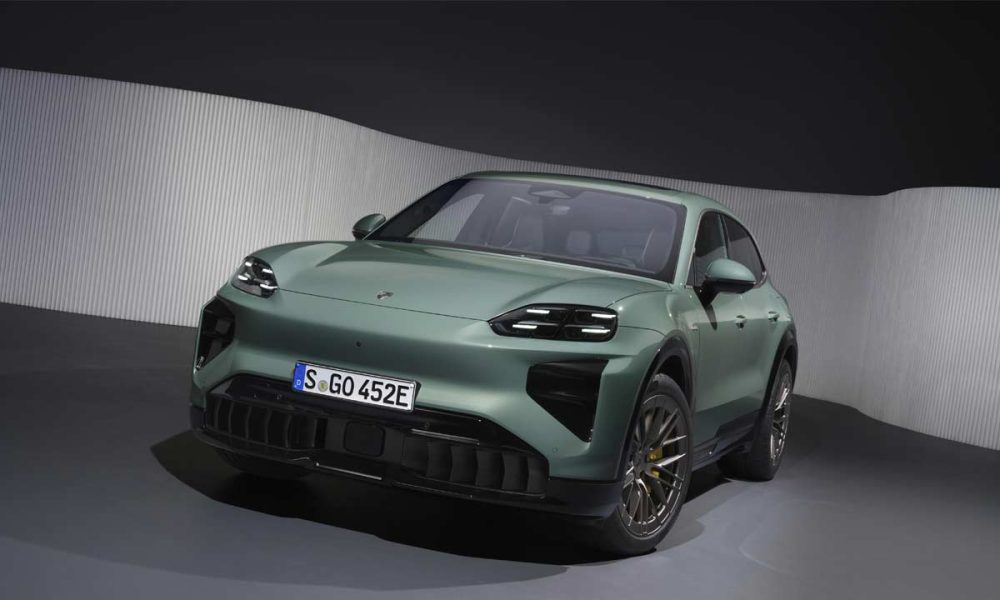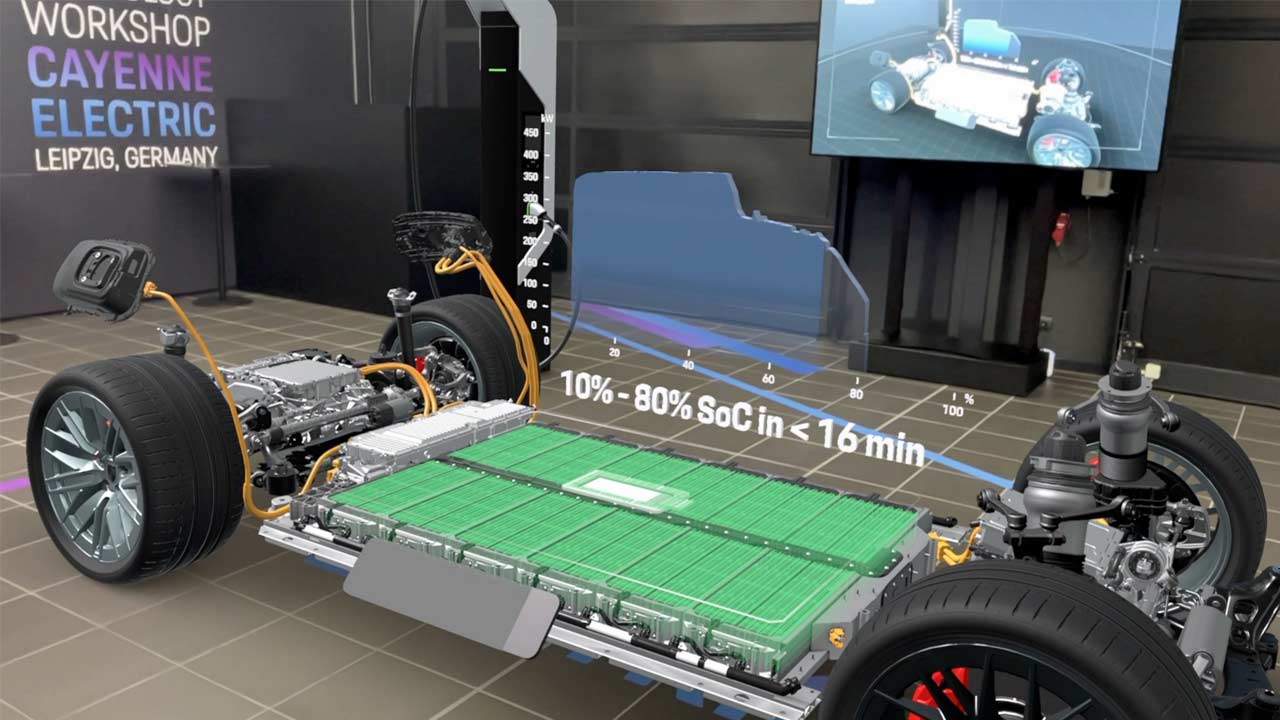
As you may know, the 4th-gen Porsche Cayenne will be sold exclusively with a battery-electric powertrain, thanks to the Premium Platform Electric (PPE) upon which it is based. Co-developed by Audi and Porsche, the PPE is primarily intended to be used by the aforementioned brands. For Porsche, the all-electric Cayenne will be the second model to use the PPE. The first one was, of course, the Macan EV.
One of the key highlights of the PPE is its 800-volt architecture, which offers benefits such as lighter/compact components, faster charging speeds, better thermal efficiency (lower losses), and consistent high performance due to better thermal efficiency. The Cayenne Electric’s battery pack has a gross energy content of 113 kWh. As you can probably tell, it also acts as an integral structural component of the vehicle. According to Porsche, this measure offers significant advantages in weight and packaging; the ratio between cells and battery housing has improved by 12% compared with the Taycan facelift battery.
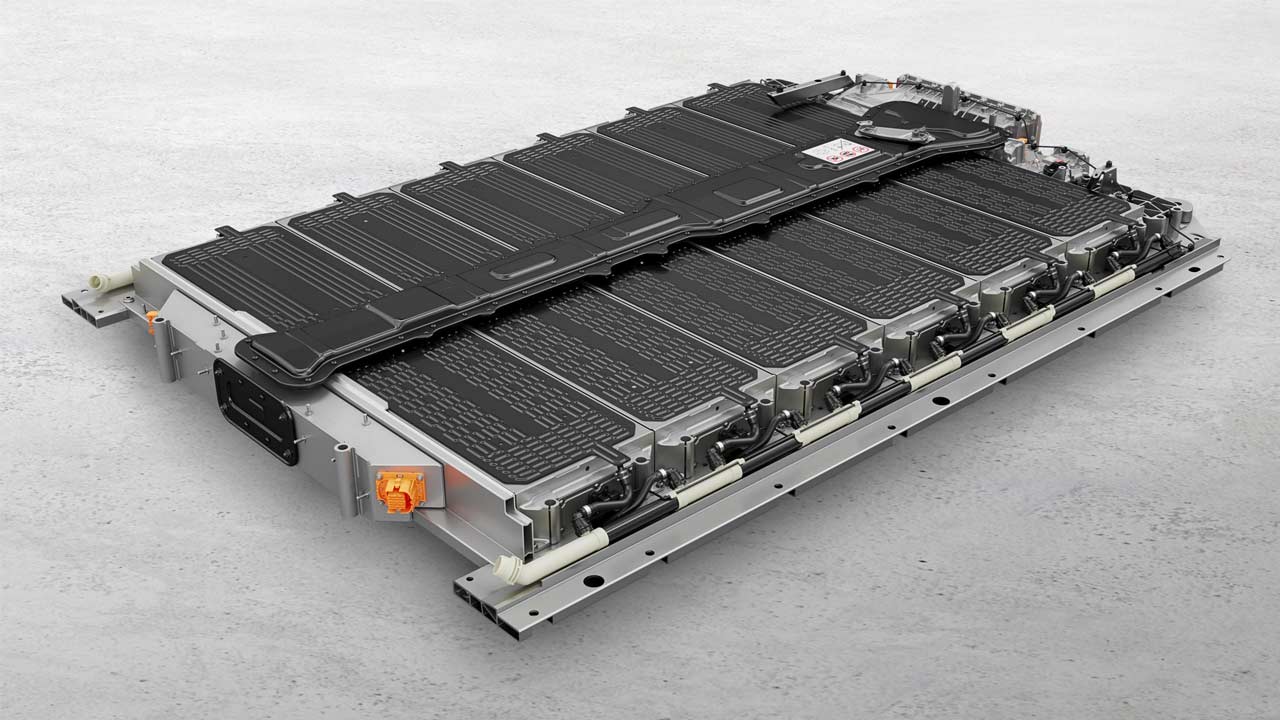
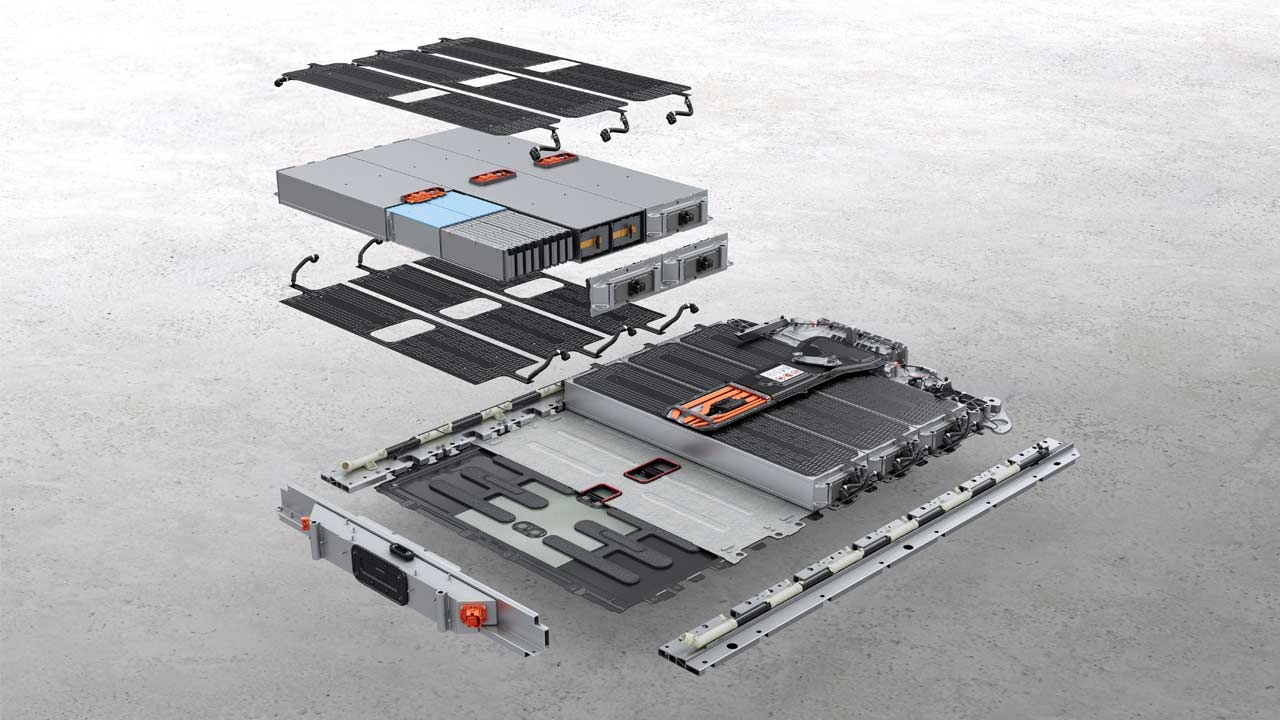
The lithium-ion battery pack comprises 192 large-format pouch cells. Each cell consists of a graphite-silicon anode and a nickel-manganese-cobalt-aluminium cathode (NMCA). The high nickel content of 86% ensures maximum energy density, while silicon in the anode significantly enhances the fast-charging capability. Aluminium increases the rigidity of the cell structure. The result: 7% higher energy density compared with the current Taycan battery, while also increasing charging efficiency, the company says.
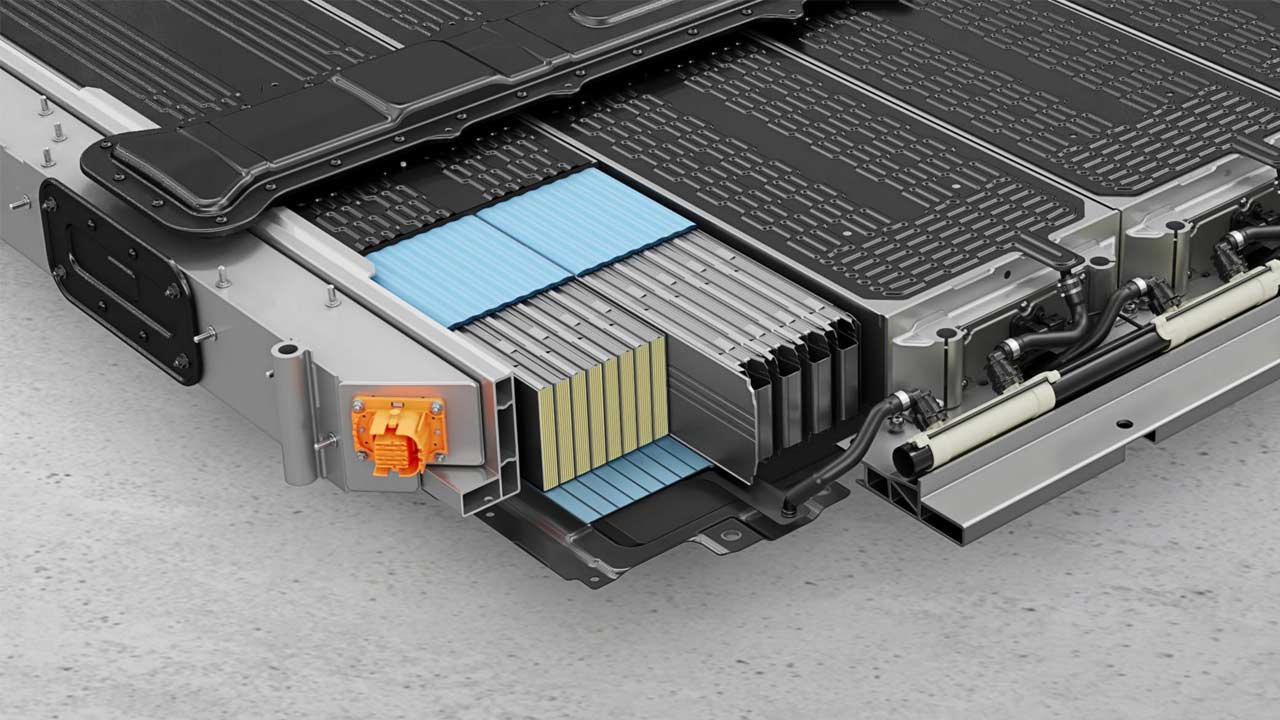
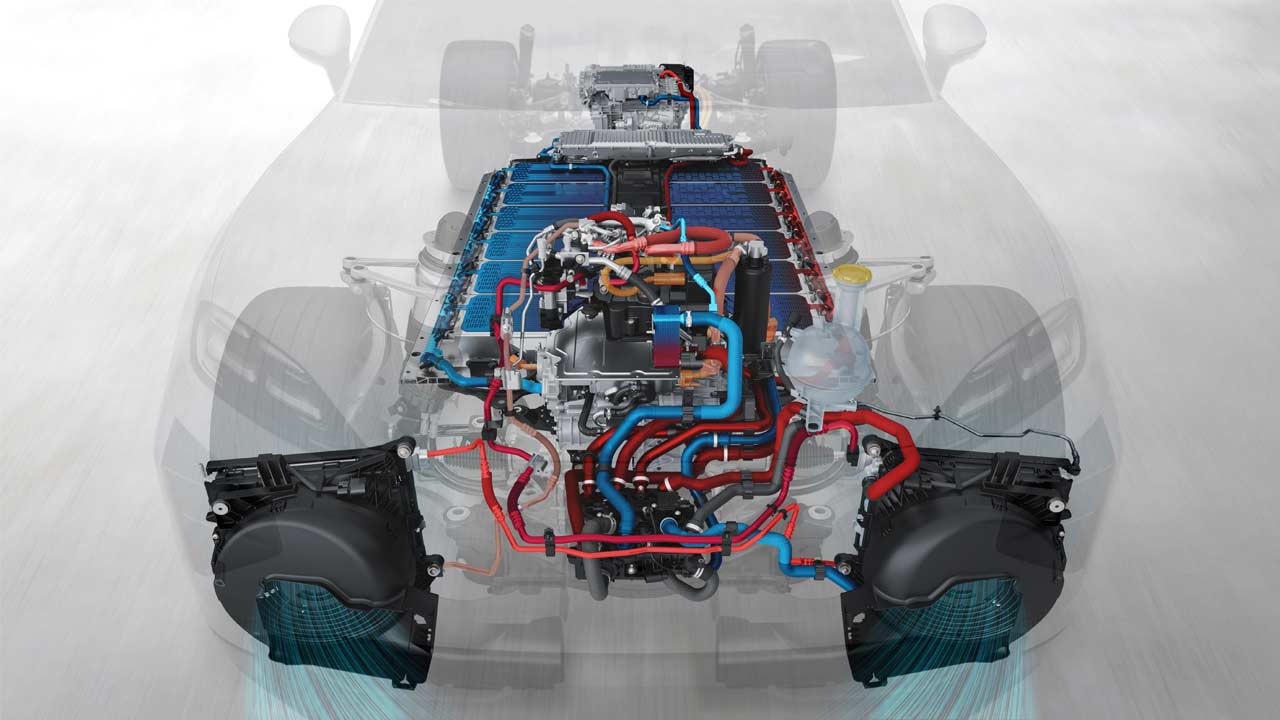
Intelligent thermal management plays a key role in achieving consistent high performance, and one of the measures Porsche has taken in this direction is this double-sided cooling system, which regulates battery temperature from both above and below. This dual cooling system allows for precise control of the temperature window, ensuring the battery always operates within the optimal range – regardless of weather conditions, charging power, or driving style. The cooling capacity corresponds to that of about 100 large household refrigerators, Porsche says. Furthermore, energy-efficient pressure fans will be used for the first time, which are said to consume around 15% less energy than conventional suction fans.
Part of the electrical architecture of the Cayenne Electric is the new Predictive Thermal Management system, which links all of the vehicle’s cooling and heating circuits, continuously analyzing temperature, route and driving profile, and proactively controls the flow of energy. While driving, the intelligent software calculates the heating or cooling requirements in real time – taking into account navigation data, topography, traffic conditions and driving behaviour.
#Porsche #CayenneElectric battery pack pic.twitter.com/t1r394UVxs
— Sagar (@autodevot) November 19, 2025
Let’s talk about the other important bits then. The Cayenne Electric’s battery pack can be DC fast-charged with up to 400 kW, that is, of course, if you find such a public fast charger. And if you do find, Porsche claims that more than 300 km (186 mi) of range can be added in just 10 minutes. Up to about 50% SoC, the charging rate consistently remains between 350 and 400 kW, Porsche says. What about the overall range? Well, Porsche estimates a WLTP range of over 600 km (373 mi). Apparently, a select few US journalists drove camouflaged prototypes and managed to achieve over 560 km (348+ mi) range on a single charge at a maximum permitted speed of 113 km/h (70 mph). Not too shabby, I think, considering that America and European regions have a fairly good charging network.
Last but not the least, Porsche will offer the new Porsche Wireless Charging system – a 11 kW wireless charging system with a compact one-box floor plate – for the first time with the Cayenne Electric. This contactless charging technology is claimed to achieve a similar efficiency to wired AC charging: up to 90%. When parked over it, the vehicle automatically detects the floor plate and lowers itself slightly for charging.