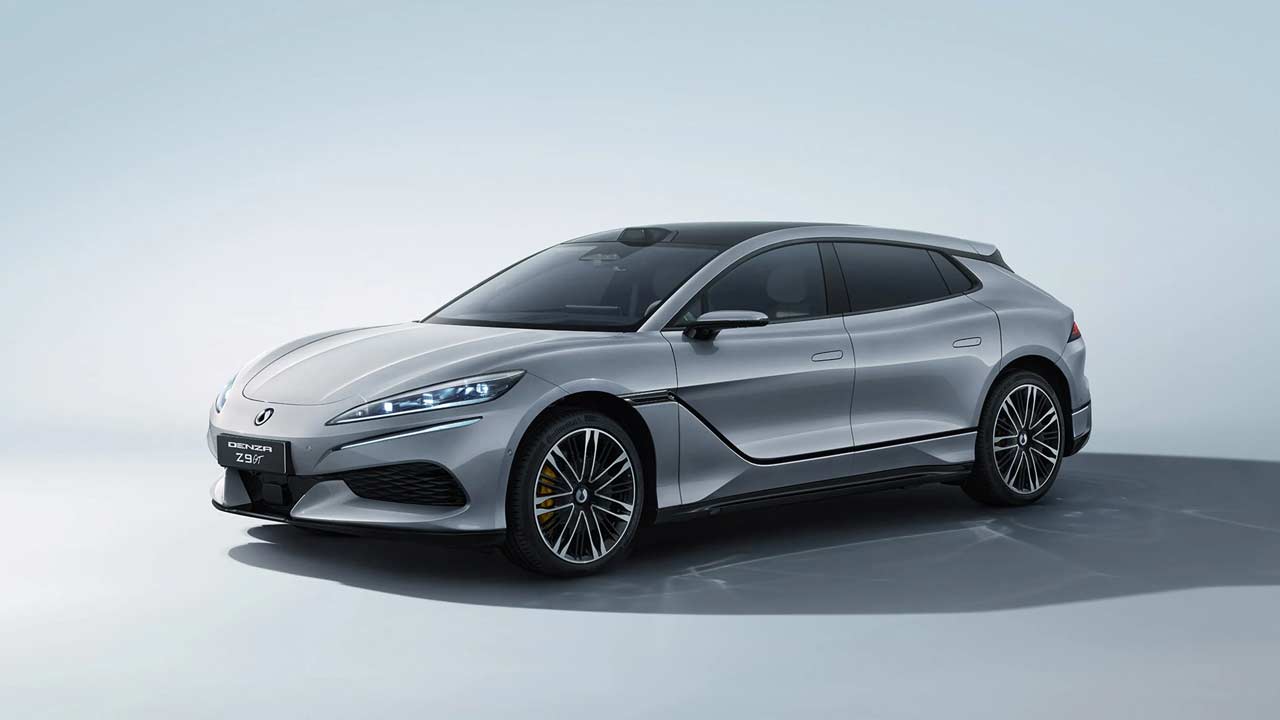
The famous and advanced BYD Blade Battery has now entered its second-generation, and it comes with a few impressive claims. The first car to pack the Blade Battery 2.0 is the Denza Z9GT. Denza is BYD’s new premium brand.
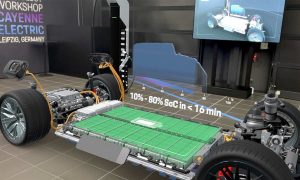
So, what are the claims? Well, the Blade Battery 2.0 is claimed to be capable of recharging at up to 1,500 kW. Just to compare, the IONITY network in Europe currently allows for recharging at up to 500 kW, depending on the location. Once charged, the 2.0 is claimed to offer a CLTC range of over 1,000 km (621+ mi).
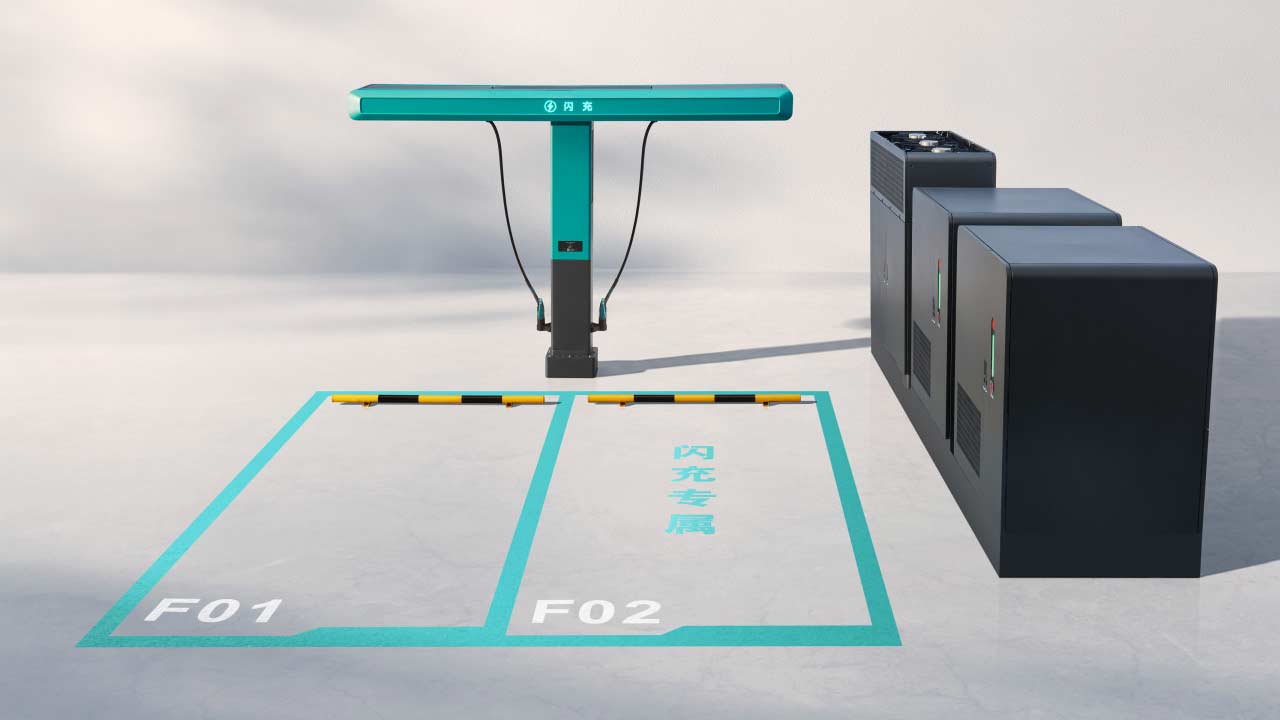
The so-called BYD Flash Charger is capable of delivering up to 1,500 kW through a single connector (Chinese-market specification). The company claims to have already installed 4,239 Flash Charging Stations across China (as of 5 March 2026), and it expects to have 20,000 in operation by the end of this year. These stations are paired with energy storage systems where the batteries inside are recharged at slower speeds, and can act as both an energy reservoir to prevent grid overload and a power amplifier that enables high-power charging.
As for the Blade Battery 2.0 itself, BYD claims to have developed a ‘FlashPass’ Ion Transport System that pushes the boundaries of lithium iron phosphate (LFP) batteries. It’s based on three core breakthroughs:
- The ‘Flash-Release’ cathode features a directionally engineered, multi-level particle-size architecture that enables dense packing and rapid deintercalation.
- The ‘Flash-Flow’ electrolyte uses AI-driven precision optimisation to deliver high ionic conductivity and fast ion mobility.
- The ‘Flash-Intercalate’ anode has a multi-dimensional lithium-insertion site construction, allowing 360° 3D high-speed lithium-ion intercalation.
Together, these technologies mean significantly reduced internal resistance, cutting heat generation at the source.
Energy density of the 2.0 is claimed to be up by 5%, thanks to electrode restructuring and graphite particles aligned perpendicular to the electrode plane, reducing lithium-ion transport resistance and enabling smooth, faster intercalation.
BYD claims that the 2.0 has passed a simultaneous Flash Charging and nail penetration test with no thermal runaway, smoke or fire, even after 500 Flash Charging cycles. The battery pack has also passed a thermal-runaway test after a forced short circuit of four cells simultaneously, with no fire or explosion, even when reaching temperatures of over 700°C.
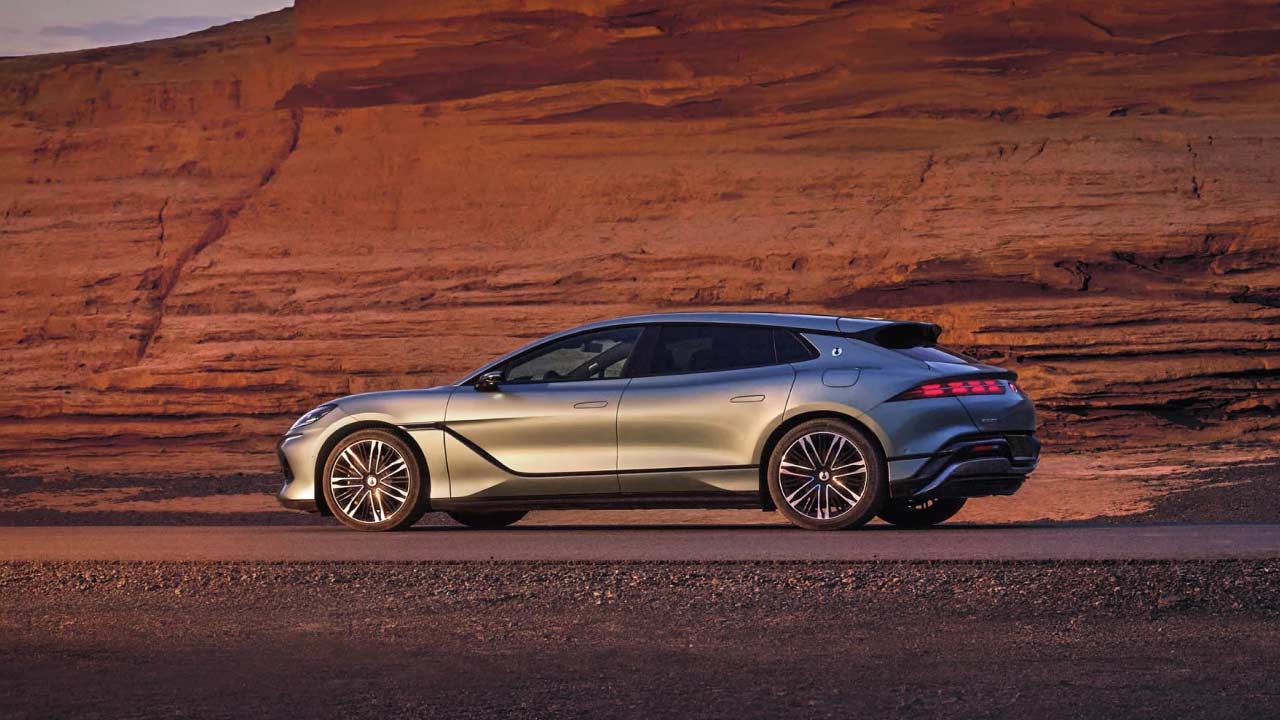
The Denza Z9GT has been introduced in Europe, and depending on the market, it’ll be available either as a BEV or a PHEV. The EV version packs a tri-motor AWD powertrain (one front and two rear) with estimated output figures of up to 710 kW (965 metric hp) and 1,150 Nm (848 lb-ft). A 100 kWh battery pack (integrated into the vehicle structure) is claimed to offer a range of over 1,000 km (621+ mi).
Some of the other key highlights of the Z9GT include active rear-wheel steering, crab walk, digital side-view mirrors, Devialet 20-speaker audio system, a cooling & heating refrigerator, and a roof-mounted rear entertainment system.